
Nobles County Arrest Records and Charges
Nobles County arrest records document the arrest or booking side of a criminal event. The source may be the Nobles County Sheriff's Office, the Nobles County Jail, Worthington Police Department, or another agency that made the arrest. A custody listing may show the person's name, booking date, arresting or holding agency, offense level, and a short charge or warrant description. That is not the same as a final court result. It is a point in time, often before arraignment, plea, dismissal, or sentencing.
The court charge record begins when a complaint, citation, or other charging paper is filed in Nobles County District Court. The Nobles County Attorney is the local prosecutor for felony-level crimes, serious driving offenses, many misdemeanors, juvenile protection matters, and related county legal work. Charge details then appear in court records, not just in jail records. For booking and custody status, use Nobles County inmate records. For the full criminal case file, including plea, disposition, sentence, and probation terms, use criminal court records.
The arrest-to-charge path matters because one arrest may lead to no filed charge, one filed charge, or several counts with different offense levels. A charge may be amended, reduced, dismissed, or later become a conviction. Public conviction data is narrower than public court data, and public arrest data is not shown in every statewide system.
Find Nobles County Arrest Records
The main court channel is Minnesota Court Records Online, known as MCRO. Search the District Court case record for Nobles County, then read the charge list and register of actions. If the arrest led to a booking but no court case is visible yet, check the official jail listing described on the inmate page and allow time for new cases to be filed. The courthouse public terminal and Court Administration are the fallback for public records that are not remotely available under court access rules.
- Open MCRO Case Search and choose a name, case number, citation number, or attorney search.
- Use Nobles County as the court location when the filter is available, then choose Criminal if the portal offers case category filters.
- Open the matching case and review the charge section, case number, filing date, hearings, and register of actions.
- Compare charge status with the jail roster if the person was recently booked or arrested on a warrant.
- For certified copies or records missing online, contact Nobles County Court Administration at the District Court.
Worthington Police Department records may supply incident or arresting-agency context for city arrests, while court charges still route through the District Court system. The Sheriff serves many Nobles County cities and operates the jail. That split is normal: law enforcement records show the arrest event, and court records show the filed charge and case progress.
The Minnesota criminal history data statute also explains why a statewide criminal history search is not a substitute for local charge review. The public BCA search is built around conviction data, not a live index of all arrests, pending charges, juvenile matters, federal cases, or out-of-state cases.
Nobles County Court Charges Filed
After an arrest, the formal court record starts with a charging document. In Nobles County, that record is filed in District Court and may be based on law enforcement reports, probable cause, citations, prosecutor review, or grand jury action in rare serious matters. MCRO charge details may show the statute, offense description, offense level, offense date, plea, disposition, amended charge, and sentence when those fields are public.
| Document | Who Uses It | What It Does |
|---|---|---|
| Complaint | Prosecutor, often after law enforcement reports | States criminal charges and probable cause facts for many Nobles County criminal cases. |
| Citation | Law enforcement or prosecutor | Starts many traffic, petty misdemeanor, misdemeanor, and DWI-related court matters. |
| Indictment | Grand jury | Charges a serious offense after grand jury review; less common than complaints. |
The Worthington Police Department source page identifies the city police department context for local law enforcement records. Arresting-agency detail can help match a booking entry to a later court charge when names are common or the charge wording changes.
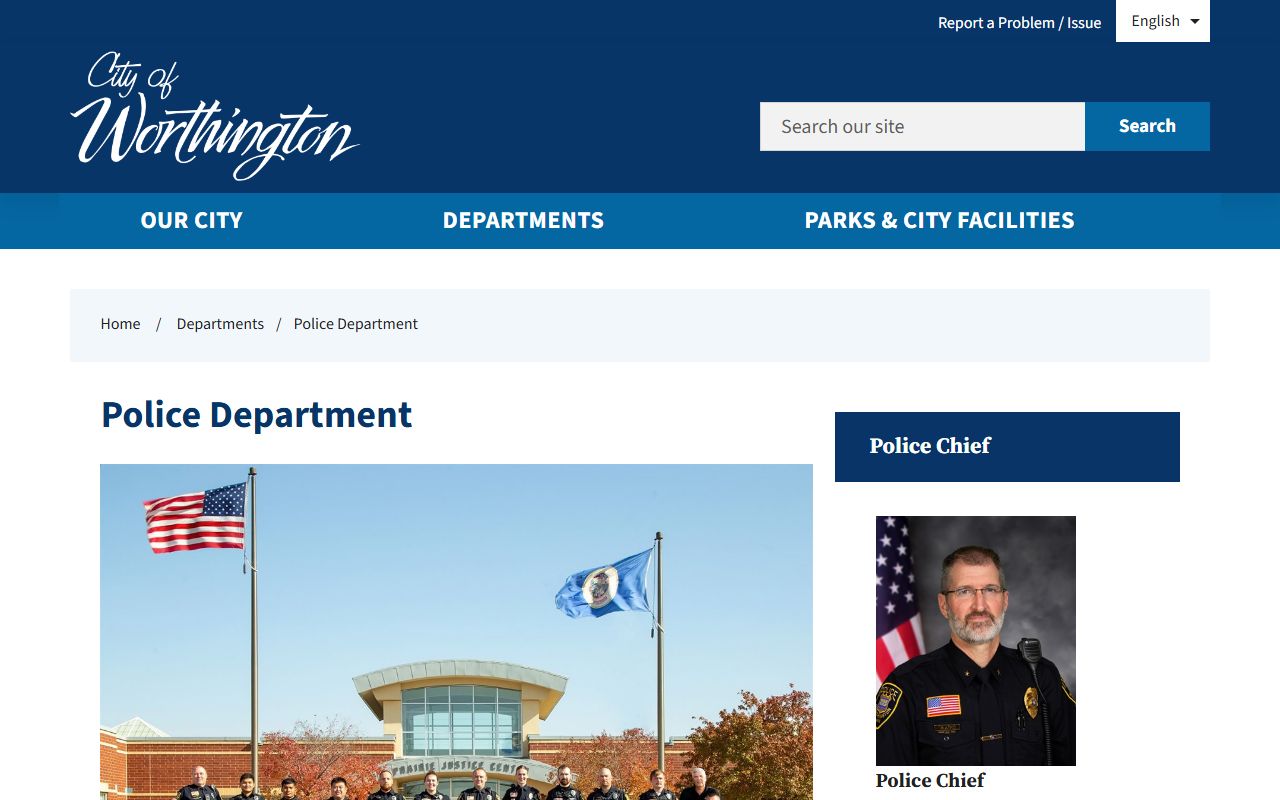
City police information is useful context, but the filed charge and case outcome must still be checked through District Court and official state court access channels.
Nobles County Charge Status
Charge status can change as a Nobles County criminal case moves forward. The first charge shown after arrest may not be the charge that ends the case. Prosecutors may amend a count, reduce an offense level, add a count, dismiss a count, or proceed to plea or trial. MCRO and courthouse records are the best places to follow those changes because they show docket events and later orders.
| Status | What It Means | Where to Check |
|---|---|---|
| Pending | The charge is open and has not reached a final outcome. | MCRO case record and court calendar. |
| Amended or reduced | The charge wording, statute, or severity level changed after filing. | Register of actions, complaint, orders, and disposition fields. |
| Dismissed | The court record shows the count or case was dismissed, with or without prejudice. | Disposition and order entries. |
| Convicted | The court entered guilt by plea, verdict, or finding. | Disposition, sentence, and BCA public conviction history when eligible. |
The public State Law Library Nobles County legal referrals page points users to local legal help, including public defender information for qualifying criminal and juvenile matters. Legal counsel is often important before acting on a pending charge, especially when a warrant, bail issue, or probation violation is involved.
Legal referral resources do not replace the court record, but they can help a defendant understand what a charge status means before a hearing or plea.
Charges and Convictions Compared
A charge is an allegation filed in court. A conviction is a court result after a guilty plea, guilty verdict, or other finding of guilt. That distinction is critical for Nobles County arrest records because a booking entry or complaint can show a charge that is later dismissed, amended, or resolved without conviction. A background check that treats all charges like convictions can be wrong.
| Point | Charge | Conviction |
|---|---|---|
| Record stage | Accusation filed after arrest, citation, or prosecutor review. | Final or near-final court outcome after plea or finding. |
| Common source | Complaint, citation, MCRO charge detail, jail listing. | Disposition, sentence, judgment, BCA public conviction data. |
| Proof level | Probable cause or charging basis. | Guilt beyond a reasonable doubt or plea admission. |
| Risk of confusion | May be amended, reduced, or dismissed. | Still may be sealed or later expunged if eligible. |
For statewide conviction review, use the official Minnesota Public Criminal History Search and the broader BCA Data Portal. Those sources help with public conviction history, but they do not show all Nobles County arrest records, pending charges, juvenile matters, federal cases, or confidential data.
Nobles County Charge Access Rules
Minnesota access law uses a public-unless-restricted framework, but remote access is narrower than courthouse access. Minn. Stat. 13.03 applies to government data held by state and local entities unless a law makes it nonpublic. Court case access is governed by the Minnesota Rules of Public Access, Rule 4 and Rule 8, which explain what can be inspected, copied, or viewed remotely.
For Nobles County arrest records, the most practical rule is simple: check the official source tied to the record type. Jail custody data belongs with the Sheriff and jail. Filed charges, hearings, dispositions, and sentences belong with District Court. Conviction history belongs with BCA when it falls within the public conviction-history limits. A courthouse terminal may show public court records that are not available through remote MCRO access.
Key access point: Public online charge detail can be incomplete when a case is sealed, juvenile, confidential, too new, or not remotely available.
Juvenile and Expunged Charges
Juvenile delinquency records are treated differently from adult charge records. Minn. Stat. 260B.171 governs maintenance and release of juvenile delinquency data, and access depends on age, offense, hearing type, and court order. A public calendar may show limited juvenile hearing information, but confidential or nonremote matters are not posted like ordinary adult cases.
The official juvenile delinquency statute source shows why juvenile Nobles County arrest records should not be assumed public just because an adult record might be public.
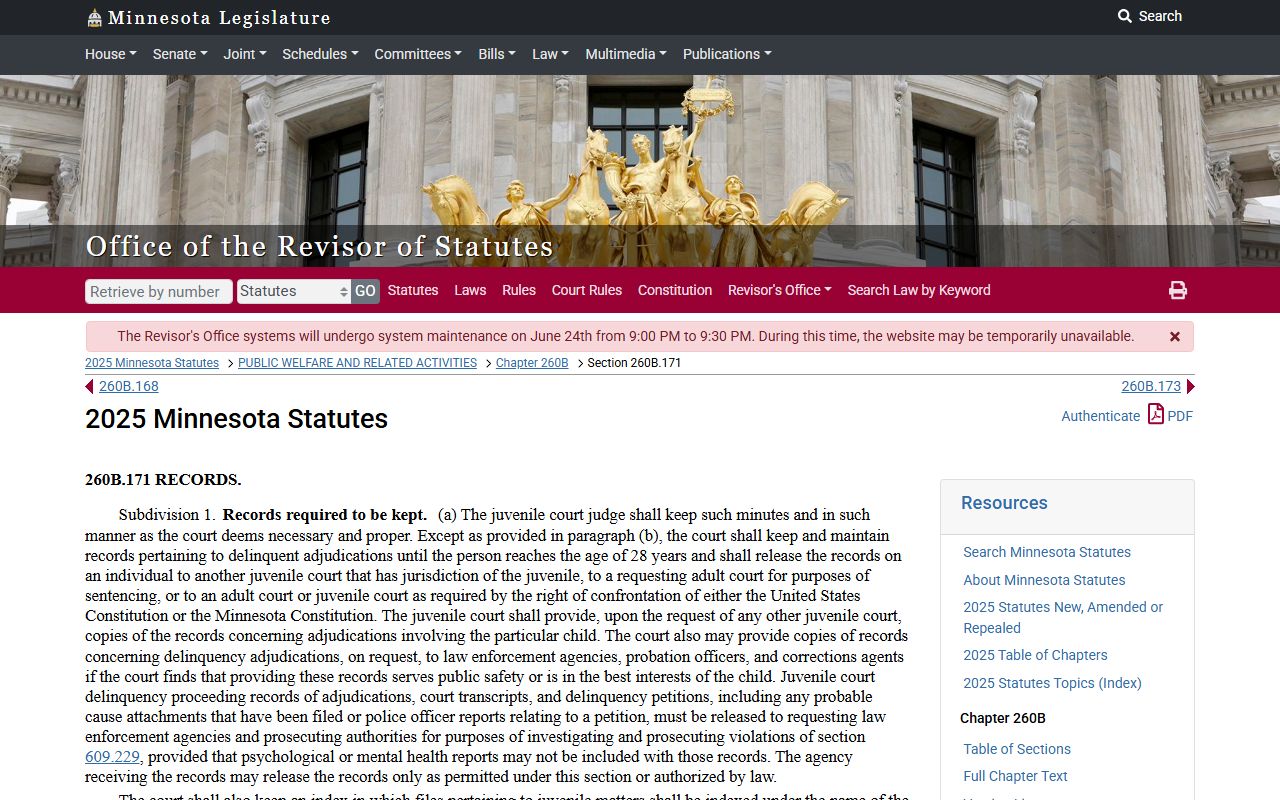
Juvenile access rules can block remote details even when a case number or hearing reference appears in limited public material.
Expungement usually means public access is sealed rather than the historic event being erased from every government system. Minn. Stat. 260B.198 addresses juvenile delinquency expungement, and Minn. Stat. 609A.03 covers criminal expungement petition procedure for many adult cases. Automatic sealing under Minnesota Clean Slate processes may also affect what appears in BCA or court searches.
The juvenile expungement source adds the court balancing rule for juvenile matters, where the benefit to the subject is weighed against public safety and agency burden.
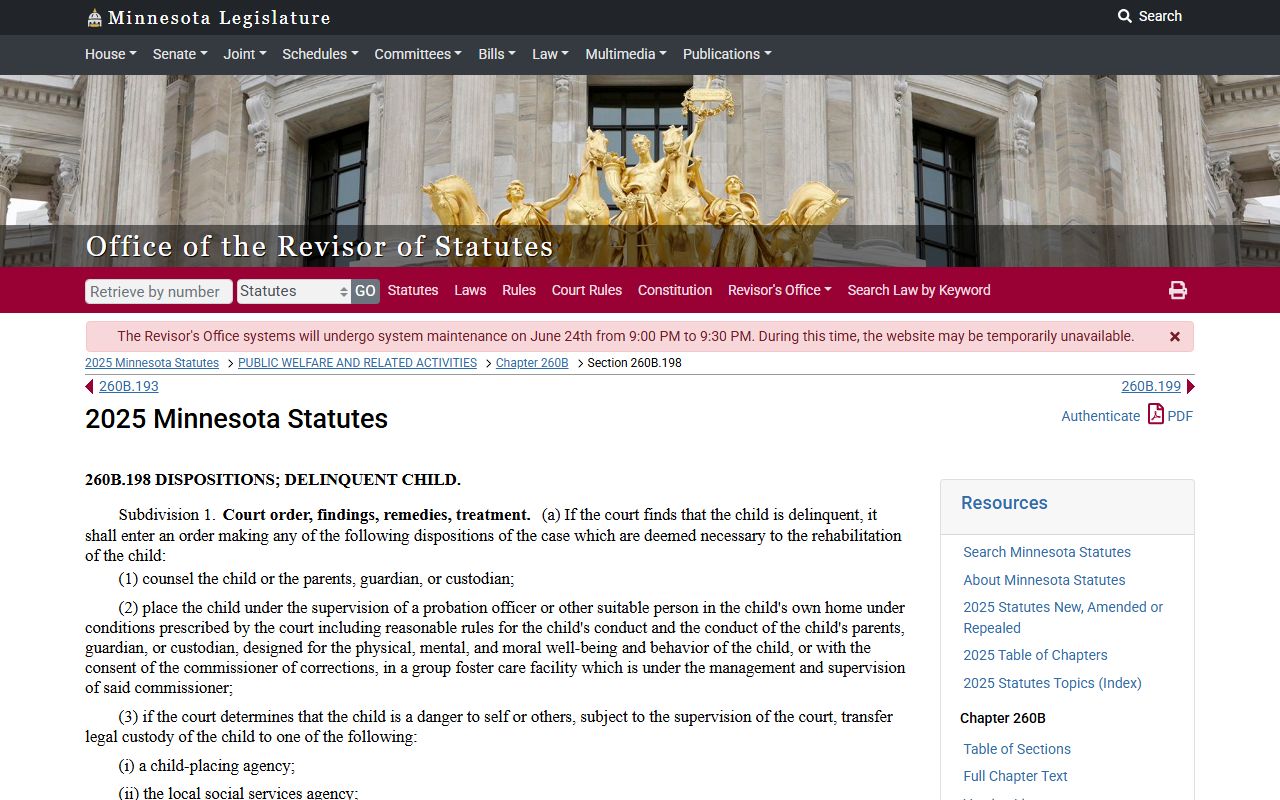
When a Nobles County charge is sealed or expunged, the absence of a public result should not be read as proof that no arrest or case ever existed.
Nobles County Charging Office
Minnesota uses the title County Attorney rather than District Attorney. Nobles County Attorney Braden Hoefert is listed at Prairie Justice Center, 1530 Airport Rd., Suite 400, Worthington, MN 56187. The office phone is (507) 295-5298, fax is (507) 372-8439, and the listed email is countyattorney@co.nobles.mn.us. The office notes that an email should generate an automated response; if it does not, the sender should call.
The County Attorney prosecutes felony-level personal crimes, property crimes, drug crimes, DWI with certain prior offenses, criminal vehicular operation, and various misdemeanors. The office also advises the county board and officials, handles civil county matters, advises a grand jury if convened, and represents Family Services in mental health, chemical dependency, juvenile protection, termination of parental rights, and child support matters.
Note: The prosecutor's office can explain office process, but legal advice for a defendant should come from defense counsel or an appointed public defender.
Background Check Limits
Public record searches can be useful for personal review, court follow-up, and source verification. They are not the same as a consumer report. Before using Nobles County arrest records, charge records, or conviction records for employment, housing, credit, insurance, or another regulated decision, use a process that complies with the Fair Credit Reporting Act and any state law that applies.
Important: Do not treat an arrest, charge, or jail listing as proof of conviction without checking the final court disposition.
Public Record Search
Sponsored Results